Introduction
Iron chlorosis is one of the most common micronutrient deficiencies affecting crops grown in high pH soils.
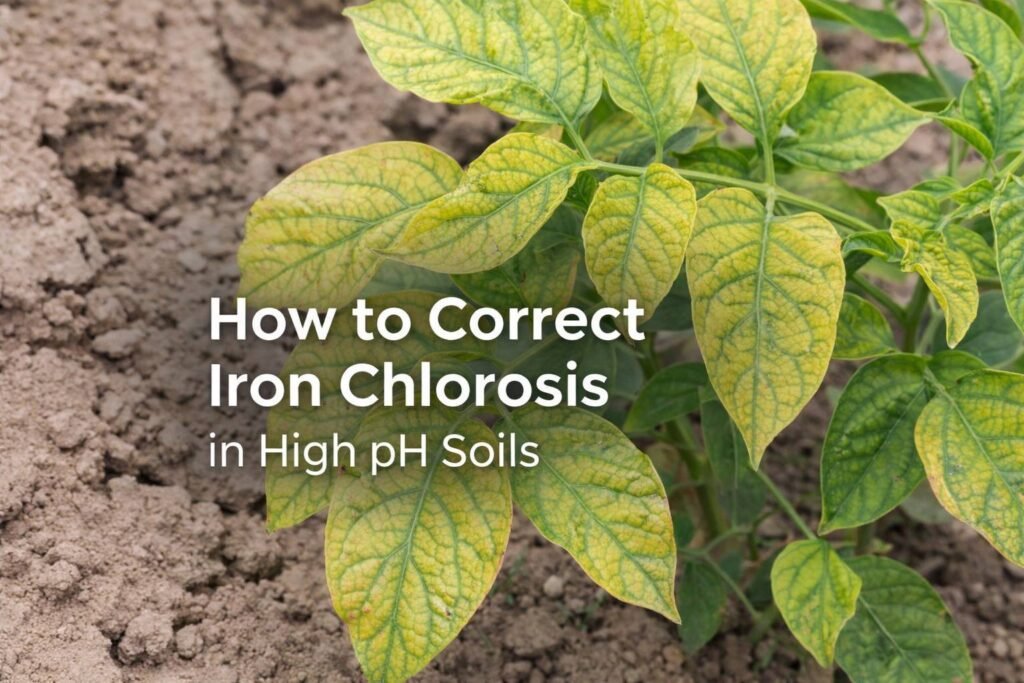
Despite the presence of iron in the soil, plants are often unable to absorb it efficiently, resulting in yellowing leaves, reduced growth, and lower yields.
Understanding how to correct iron chlorosis in high pH soils is essential for maintaining healthy crop development and maximizing productivity.
What Causes Iron Chlorosis in High pH Soils
Iron chlorosis typically occurs in alkaline or calcareous soils where soil pH is above 7.0.
In these conditions:
- Iron becomes insoluble and unavailable to plants
- Root uptake of iron is significantly reduced
- Nutrient imbalance affects plant metabolism
This issue is especially common in:
- Vegetables
- Citrus crops
- Vineyards
- Greenhouse crops
Symptoms of Iron Chlorosis
Identifying iron deficiency early is critical.
Common symptoms include:
- Yellowing between leaf veins (interveinal chlorosis)
- Young leaves turning pale or yellow
- Reduced plant vigor and growth
- Lower photosynthesis efficiency
These symptoms often appear first in new growth.
Why Iron Fertilization in Soil Is Often Ineffective
In high pH soils, applying traditional iron fertilizers to the soil may not solve the problem.
Reasons include:
- Iron quickly becomes fixed and unavailable
- Soil conditions limit nutrient mobility
- Plants cannot access applied nutrients efficiently
This is why many growers struggle to correct iron deficiency using conventional methods.
Effective Solutions to Correct Iron Chlorosis
To correct iron chlorosis effectively, growers should focus on improving iron availability and uptake.
Recommended strategies:
- Use highly available iron formulations
- Apply iron through foliar spraying for rapid correction
- Repeat applications if deficiency persists
- Combine with balanced crop nutrition programs
Foliar application is often the fastest and most reliable method to restore plant health.
Recommended Product for Iron Deficiency
For efficient correction of iron chlorosis, using a product with improved availability is critical.
TerraNutrix IRON BOOST
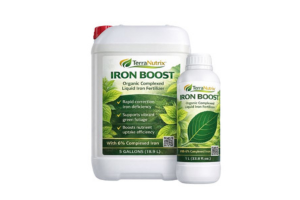
- Organic complexed iron formulation
- Improved nutrient availability in plant tissues
- Designed for efficient foliar uptake
- Suitable for high pH soil conditions
This type of formulation helps deliver iron directly to plant tissues where it is needed most.
Best Practices for Growers
To prevent and manage iron chlorosis:
- Monitor soil pH regularly
- Use foliar nutrition when symptoms appear
- Apply micronutrients proactively
- Integrate iron into a balanced crop nutrition program
Conclusion
Iron chlorosis in high pH soils is a common but manageable issue.
By understanding the causes and applying the right solutions, growers can restore plant health, improve crop performance, and prevent long-term yield losses.
👉 Looking for effective iron nutrition solutions?