Introduction
Calcium is one of the most important nutrients for fruit crops, yet it is often misunderstood and poorly managed.
Many common fruit quality issues—such as soft fruit, cracking, and reduced shelf life—are directly related to calcium deficiency.
Understanding how calcium affects fruit quality and how to manage it properly is essential for achieving high-value crop production.
The Role of Calcium in Fruit Development
Calcium plays a fundamental role in plant structure and fruit quality.
It is essential for:
- Cell wall formation
- Tissue strength and stability
- Fruit firmness
- Structural integrity of plant cells
Unlike mobile nutrients such as nitrogen or potassium, calcium is not easily redistributed within the plant.
This means a continuous supply is required during fruit development.
Common Calcium Deficiency Problems
Calcium deficiency can lead to several serious crop issues:
- Blossom-end rot (tomato, pepper)
- Tip burn (leafy vegetables)
- Fruit cracking
- Soft fruit and poor firmness
- Reduced shelf life
These problems directly affect marketability and profitability.
Why Calcium Deficiency Happens
Even when calcium is present in the soil, plants may still experience deficiency due to:
- Poor calcium mobility within the plant
- Irregular water supply
- Rapid fruit growth
- High humidity reducing transpiration
- Competition with other nutrients
Because calcium moves mainly through the transpiration stream, it often fails to reach developing fruits.
Why Soil Calcium Is Not Enough
Applying calcium to the soil alone is often insufficient.
Reasons include:
- Limited transport from roots to fruits
- Environmental conditions affecting uptake
- Calcium being locked in soil
As a result, fruits may still suffer from deficiency even when soil calcium levels are adequate.
Effective Strategies to Improve Calcium Nutrition
To ensure proper calcium supply, growers should adopt a targeted approach.
Recommended strategies:
- Apply calcium during flowering and fruit development
- Use foliar applications for direct delivery
- Maintain consistent irrigation
- Use efficient calcium formulations
- Combine calcium with balanced nutrition programs
Foliar calcium application is one of the most effective ways to support fruit quality.
Recommended Calcium Solutions
Selecting the right calcium formulation is critical.
TerraNutrix CALCIUM BOOST PRO
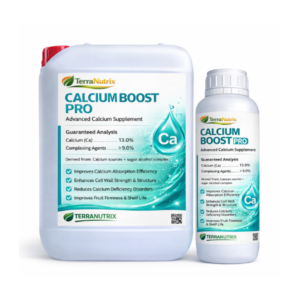
- Advanced complexed calcium formulation
- Improved calcium mobility within plant tissues
- Designed for efficient foliar uptake
TerraNutrix CALCIUM BORON
- Calcium and boron combination for reproductive growth
- Promotes flower formation and fruit set
- Enhances fruit firmness and quality
- Reduces physiological disorders
These products help deliver calcium directly to fruits where it is needed most.
Best Practices for Growers
To improve fruit quality and prevent calcium-related disorders:
- Start calcium applications early
- Apply regularly during fruit development
- Avoid excessive nitrogen
- Maintain balanced irrigation
- Monitor plant stress conditions
Conclusion
Calcium is a key factor in determining fruit quality, firmness, and shelf life.
By understanding how calcium functions in plants and applying the right strategies, growers can significantly improve crop value and market performance.
Looking to improve fruit quality and shelf life?